Tuesday, 11 June 2013

There are
many mathematical theories found in nature, one in particular that challenges
people’s perceptions; the theory of Hyperbola.
My research
started with a questionnaire focusing on geometry in nature, helping me to
establish that people’s perception of mathematical geometry is paradoxical to
those of organic forms.
The Hyperbolic plane is surface that has a constant negative curvature of which there are many approximate examples found in nature. Scientists over the years have developed theories based on equations, but none had created a hyperbolic curve in 3D until William Thurston.
Mathematician Dr Daina Taimiņa used Thurston’s idea of paper annuli to make a hyperbolic curve by crocheting.
Hyperbola is relatively new to jewellery design; basic techniques can simulate this form but not create an accurate hyperbolic curve. I wanted to take the idea one step further and create an accurate hyperbolic curve in metal without the use of computer technology. Being able to crochet I was inspired by Dr Daina Taimiņa to use her pattern as the bases for my designs.
During this project I have developed a unique methodology and design process in order to make and produce contemporary and conceptual hyperbolic jewellery.
The Hyperbolic plane is surface that has a constant negative curvature of which there are many approximate examples found in nature. Scientists over the years have developed theories based on equations, but none had created a hyperbolic curve in 3D until William Thurston.
Mathematician Dr Daina Taimiņa used Thurston’s idea of paper annuli to make a hyperbolic curve by crocheting.
Hyperbola is relatively new to jewellery design; basic techniques can simulate this form but not create an accurate hyperbolic curve. I wanted to take the idea one step further and create an accurate hyperbolic curve in metal without the use of computer technology. Being able to crochet I was inspired by Dr Daina Taimiņa to use her pattern as the bases for my designs.
During this project I have developed a unique methodology and design process in order to make and produce contemporary and conceptual hyperbolic jewellery.
Wednesday, 5 June 2013
Dissertation bibliography
Bibliography
Images
Fig 1.
I the lord of sea and sky, made and Photographed by artist 2012
I the lord of sea and sky, made and Photographed by artist 2012
Fig 2.
Thistles’ corsage ornament, Designed by Rene Lalique, 1905.
Thistles’ corsage ornament, Designed by Rene Lalique, 1905.
http://www.vam.ac.uk/content/articles/h/jewellery-through-the-ages/ (accessed
10/12/2012)
Fig 3.
Earrings, Gold set with Garnets. Made ca. 1835, England, artist/maker unknown.
http://collections.vam.ac.uk/search/?limit=15&q=jewellery&commit=Search&after-adbc=AD&before-adbc=AD&category%5B0%5D=53&narrow=1&place%5B0%5D=8&material%5B%5D=67&offset=0&slug=0 (accessed 10/12/2012)
Fig 3.
Earrings, Gold set with Garnets. Made ca. 1835, England, artist/maker unknown.
http://collections.vam.ac.uk/search/?limit=15&q=jewellery&commit=Search&after-adbc=AD&before-adbc=AD&category%5B0%5D=53&narrow=1&place%5B0%5D=8&material%5B%5D=67&offset=0&slug=0 (accessed 10/12/2012)
Fig 4.
Made in England 1975 (made) by Michael Burton.
http://collections.vam.ac.uk/item/O118110/ring-burton-michael/ (accessed 10/12/2012)
Made in England 1975 (made) by Michael Burton.
http://collections.vam.ac.uk/item/O118110/ring-burton-michael/ (accessed 10/12/2012)
Fig 5.
Otto Kunzli, Gold makes you go blind, 1980,
bracelet made from rubber and gold
Fig 6.
Gijs Bakker and Emmy van Leersum. Clothing Suggestions 1970 tube-knitted elastic textile
Gijs Bakker and Emmy van Leersum. Clothing Suggestions 1970 tube-knitted elastic textile
http://www.gijsbakker.com/home (accessed
10/12/2012)
Fig 7.
Aluminum
collar, designed by Emmy van Leersum in 1967 in Art Aurea’s article on the
Dutch avant-garde
http://www.artaurea.com/magazin/103-the-rebirth-of-art-aurea (accessed
10/12/2012)
Fig 8.
Otto Künzli, Beauty Gallery, Susy, Photo
frame
Fig 9.
Modernist
Ring, made and
photographed artist, Sterling silver, 2010
Fig 10.
Nature’s
Silhouette, made and Photographed by artist, Acrylic neckpiece 2010
Fig 11.
Eat/Diamonds
, Everyday/Rings, Silver and Resin/Wax/Ice, Hannah Louise Pittman
Fig 12.
Seaweed, Photograph taken by artist
Fig 13.
M.C Escher, Circle limit IV “Heaven and Hell” 1960
http://euler.slu.edu/escher/index.php/Hyperbolic_Geometry (accessed 20/10/2012
M.C Escher, Circle limit IV “Heaven and Hell” 1960
http://euler.slu.edu/escher/index.php/Hyperbolic_Geometry (accessed 20/10/2012
Fig 14.
Anemone Photographed by artist 2012
Fig 15.
Brain Coral photographed by artist 2012
Brain Coral photographed by artist 2012
Fig 16.
Trefoil Loop, By Benjamin Storch, Germanium Silver, Dimensions: 150 x 145 x 130 mm
Trefoil Loop, By Benjamin Storch, Germanium Silver, Dimensions: 150 x 145 x 130 mm
http://www.benjaminstorch.co.uk/SILVER/SCRIPTS/silver.html (accessed 12/10/12)
Fig 17.
Carlo Séquin, "Cube-Volution-5" (June 2009)
Carlo Séquin, "Cube-Volution-5" (June 2009)
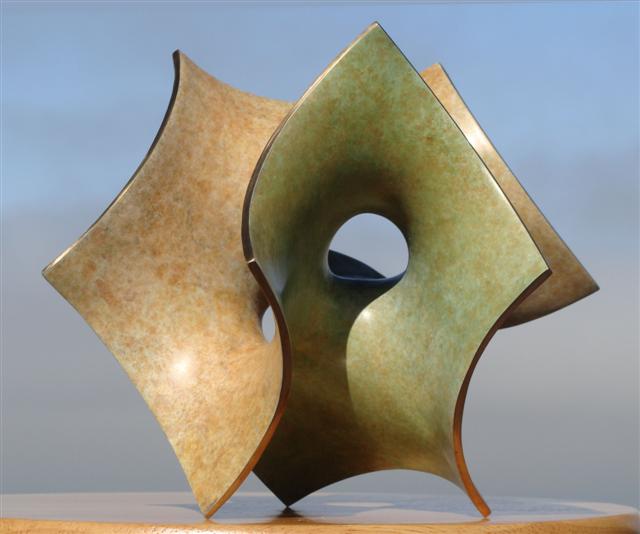
Fig 18.
Untitled, date not specified, Sophie Buckley
Untitled, date not specified, Sophie Buckley
Fig 19.
Montipora coral Photographed by artist
Fig 20.
Hyperbolic
ring, sterling silver, made and photographed by artist 2013, 1 of 8
Fig 21.
Hyperbolic
ring, sterling silver, made and photographed by artist 2013, 2 of 8
Fig 22.
Hyperbolic ring stack, sterling silver, made and photographed by artist 2013, 1-5 of 8
Fig 23.
Hyperbolic ring, sterling silver, made and photographed by artist 2013, 5 of 8
Hyperbolic ring, sterling silver, made and photographed by artist 2013, 5 of 8
Books
Bernabei, Roberta (2011). Contemporary Jewellers.
Interviews with European artists. Berg
Besten, den, Liestbeth (2012). On Jewellery. A
compendium of international contemporary art jewellery. Arnoldsche art
publishers.
Brundtland, Malm, Cecilie (2003) Tone Vigeland,
Jewellery + Sculpture Movements in sculpture. Arnoldsche art publishers.
Cohn, Susan (2012) Unexpected pleasures. The Art
and Design of Contemporary Jewellery. Rizzoli International Publications, inc.
Hartop, C. and Norton, J. (2008) Geometry and
the silversmith: the Domcha collection [Book]. Cambridge: John Adamson.
Mansell, Amanda (2008). Adorn, New jewellery.
Laurence King publishing Ltd.
Rabinovitch, Seymour, Benton. And Clifford, Helen
(2000) Contemporary Silver, Commissioning, Designing, Collecting. Merrell
Publishers Limited.
Staal, G.,
Noten, T. and Baalen, A.v. (tr.) (2006) Ted Noten : CH2=C(CH3)C(=O)OCH3
enclosures and others TN's [Book]. Rotterdam: 010 Publishers.
Joris, Yvonne (2005) Gijs Bakker and jewelry:
catalogue of jewelry, Arnoldsche
Websites
http://www.crochetconcupiscence.com/2012/08/contemporary-sculpted-textiles-of-sophie-buckley/ (accessed 3/10/2012)
http://www.sophiebuckley.co.uk/ (accessed 3/10/2012)
http://www.melanieeddy.co.uk/gallery.php (accessed
3/10/2012)
http://textiles-installation.wikispaces.com/ (accessed 3/10/2012)
http://www.alfredo-haeberli.com/products/hyperbolic/1.html (accessed 9/10/2012)
http://www.sciencenews.org/view/generic/id/56987/description/The_mutual_inspiration_of_art_and_mathematics (accessed 9/10/2012)
http://www.artcat.com/exhibits/15974 (accessed 9/10/2012)
http://www.math.wisc.edu/~meyer/airsculpt/sculpt07.html (accessed 9/10/2012)
http://mathmunch.wordpress.com/tag/crochet/ (accessed 9/10/2012)
http://katherine-mavridis.blogspot.co.uk/2012/04/close-up-of-exquisite-forms-knit-can.html (accessed 9/10/2012)
http://aquaallie.blogspot.co.uk/2009/03/crafty-coral.html (accessed
12/10/2012)
http://archiseek.com/2010/2002-locenografic-valencia-spain/#.UHU3tBhOB2w (accessed
12/10/2012)
http://www.fastcodesign.com/mba/1670850/10-masterpiece-buildings-that-turn-concrete-into-poetry#1 (accessed
12/10/2012)
http://crochetcoralreef.org/contributors/index.php (accessed
12/10/2012) (image)
http://www.cs.berkeley.edu/~sequin/ (accessed 12/10/2012) (image)
http://www.cs.berkeley.edu/~sequin/SCULPTS/CHS_bronzes/2009_0703_bronzes/Cube5Volab%20%28Small%29.JPG (accessed
12/10/2012)
http://www.benjaminstorch.co.uk/JEWEL/SCRIPTS/jewel.html (accessed 12/10/2012)
http://www.benjaminstorch.co.uk/SILVER/SCRIPTS/silver.html (accessed
12/10/2012)
http://www.benjaminstorch.co.uk/research/scripts/research.html (accessed
12/10/2012)
http://robcrowma.blogspot.co.uk/ (accessed 12/10/2012) (image)
http://www.druinenamels.com/gallery.html (accessed
15/10/2012)
http://mathworld.wolfram.com/Catenoid.html (accessed
15/10/2012)
http://mathworld.wolfram.com/Helicoid.html (accessed
15/10/2012)
http://malini-math.blogspot.co.uk/2010/08/maths-and-nature.html (accessed
15/10/2012)
http://euler.slu.edu/escher/index.php/Hyperbolic_Geometry (accessed
15/10/2012)
http://theiff.org/press/interweave.html (accessed
18/10/2012)
http://www.eileenmoylan.com/2012/02/theresa-nguyen/ (accessed
18/10/2012)
http://www.benjaminstorch.co.uk/SILVER/SCRIPTS/silver.html (accessed
18/10/2012)
http://animal-world.com/Aquarium-Coral-Reefs/Yellow-Leather-Coral (accessed18/10/2012)
http://vanbuskirkjewellery.bigcartel.com/product/honey-comb-ring (accessed
22/11/2012)
http://www.ixojewellery.com/shop/jewellery/take-a-look/ (accessed
22/11/2012)
http://www.ajdc.org/designproject/index.html (accessed
22/11/2012)
http://www.smm-metalinclinations.org/P_romanski.htm (accessed
22/11/2012)
http://www.hnorthrop.com/escher.html (accessed
29/11/2012)
http://arthistory.about.com/cs/glossaries/g/s_space.htm (accessed
29/11/2012)
http://www.hannahlouisepittman.co.uk/ (accessed
03/12/2012)
http://www.vam.ac.uk/content/articles/h/jewellery-through-the-ages/ (accessed
03/12/2012)
http://www.tednoten.com/work/portfolio/beautiful-by-accident (accessed
03/12/2012)
http://oxforddictionaries.com/definition/english/conceptual%2Bart (accessed
08/12/2012)
http://www.designboom.com/chic/emmy-van-leersum-at-delux-strikes-a-pose-exhibition/ (accessed
10/12/2012)
http://www.droog.com/about/designers/gijs-bakker/ (accessed
10/12/2012)
http://www.iriseichenberg.nl/eichenberg.html (accessed
12/12/2012)
http://www.artyfactory.com/art_appreciation/timelines/modern_art_timeline.htm (accessed 4/01/2013)
''Organic geometry''

I have always found inspiration in my personal environment drawing
on its relevance in my life. This journey has now led me to live by the sea and
I have developed a deep affinity with the shore line and its treasures.
 |
| Sea Anemone at Plymouth Aquarium Photographed by Abigail Ashmore |
 |
| Fungi showing hyperbolic curves Photographed by Abigail Ashmore |
 |
| Honeycomb Worm at Sandymouth beach Cornwall Photographed by Abigail Ashmore |
As a designer and artist my senses are my tools, particularly my haptic and
visual understanding. I focus on the reasons for the things I make and the
emotional attachments I have to them, so I am able to be creative in a way that
fulfils my individuality.
Throughout this project I have been inspired in particular by a quote that applies to myself and others as creative practitioners.
Throughout this project I have been inspired in particular by a quote that applies to myself and others as creative practitioners.
“What I hear I
forget,
What I see I remember,
What I touch I understand”
What I see I remember,
What I touch I understand”
Confucius
(555-479 BC)
(Taimiņa, Daina
2009 pg1)
 |
| Giant clam Sketch by Abigail Ashmore |
In this project I have taken into consideration views and opinions
on geometry and Contemporary conceptual jewellery. My aim was to produce an organic
form that challenges people’s perceptions of geometry.
Geometry has dominated my design processes from the beginning of my journey and will continue to do so. As an artist I am influenced by everything I encounter. The natural world and my direct environment at any given time is full of geometry so it is difficult to avoid in design.
I enjoy the accuracy of mathematics in design and as I have found in my latest project, its ability to be unpredictable. Marine life and in particular corals have offered up a new route of exploration, where geometry plays an intrinsic role in the way these creatures develop and grow with an organic appearance. This geometric formula is an example of a hyperbolic plane.
Hyperbolic curves are found in corals, specifically Montipora. The way corals grow mimic the way hyperbolic curves develop by using the technique of crochet.
Each of my final pieces started by crocheting fine lace yarn around a wax ring, these models were then cast in silver and used as a product from which to design.
I focused on the use of stone setting to convey the colours associated with marine life and corals.
My dissertation focused greatly on target audience and how I wish to be perceived as an artist. Age isn’t a target but instead an interest in originality and process. The steps I have taken to achieve each of my pieces allow the wearer to tell a story, teach them a complicated theory and is a contradiction of common beliefs.
Geometry has dominated my design processes from the beginning of my journey and will continue to do so. As an artist I am influenced by everything I encounter. The natural world and my direct environment at any given time is full of geometry so it is difficult to avoid in design.
I enjoy the accuracy of mathematics in design and as I have found in my latest project, its ability to be unpredictable. Marine life and in particular corals have offered up a new route of exploration, where geometry plays an intrinsic role in the way these creatures develop and grow with an organic appearance. This geometric formula is an example of a hyperbolic plane.
Hyperbolic curves are found in corals, specifically Montipora. The way corals grow mimic the way hyperbolic curves develop by using the technique of crochet.
Each of my final pieces started by crocheting fine lace yarn around a wax ring, these models were then cast in silver and used as a product from which to design.
I focused on the use of stone setting to convey the colours associated with marine life and corals.
My dissertation focused greatly on target audience and how I wish to be perceived as an artist. Age isn’t a target but instead an interest in originality and process. The steps I have taken to achieve each of my pieces allow the wearer to tell a story, teach them a complicated theory and is a contradiction of common beliefs.
 |
| Model of hyperbolic ring in sterling silver |
 |
| Design of hyperbolic ring |
Each piece is a one off as the process creates a
variation in each outcome. It is because of this fact that I would hope to achieve a retail price of £200-£60. Currently my jewellery can only be purchased directly from me or locally from a small gallery in Cornwall. This collection can be seen at exhibitions in Cornwall, Devon and London this year.
Hyperbolic pendant
Sterling silver with Swiss blue topaz.   |
| Hyperbolic earrings Sterling silver and Sapphire coloured CZ  Hyperbolic ring in Sterling silver with a single grey pearl. |
 |
| Hyperbolic Polip ring set with tiny Aquamarine, Peridot and Alexanderite. For a photostream of my past fours years making follow the link below http://www.flickr.com/photos/97032086@N06/ |
CV
Statement
Abigail Ashmore studied the
art of traditional jewellery making at Truro College in Cornwall. Currently
selling her work in a gallery in Porthleven she also hopes to be working for
another jewellery designer.
“As a designer and artist my
senses are my tools, particularly my haptic and visual understanding. I focus
on the reasons for the things I make and the emotional attachments I have to
them, so I am able to be creative in a way that fulfils my individuality.
I enjoy the accuracy of
mathematics in design and as I have found in my latest project, its ability to
be unpredictable. Marine life and in particular corals have offered up a new
route of exploration, where geometry plays an intrinsic role in the way these
creatures develop and grow with an organic appearance. This geometric formula is an example of a
hyperbolic plane.”
Education
2012-2013 Truro College – BA Silversmithing & Jewellery
2012-2013 Truro College – BA Silversmithing & Jewellery
2010-2012 Truro College –FdA
Silversmithing & Jewellery
2009-2010 Colchester Institute
– BTEC National Diploma Art & Design
Professional experience
2010- present – Studio
jeweller/artist
Exhibitions
2011- Lemon Quay Truro
2011- The contemporary craft festival -Bovey Tracey
2011 – Cornwall design fair -Trereife
2011- The contemporary craft festival -Bovey Tracey
2011 – Cornwall design fair -Trereife
2012- Lemon Quay Truro
2012 The contemporary craft festival -Bovey Tracey
2012 The contemporary craft festival -Bovey Tracey
2013- Lemon Quay Truro
2013 -The contemporary craft festival – Bovey Tracey
2013- London New Designers
2013 -The contemporary craft festival – Bovey Tracey
2013- London New Designers
Outlets
Porthleven jewellery workshop
Subscribe to:
Comments (Atom)